Security
Bunker mode needs privacy
Ethereum Foundation researcher Justin Drake wants holders to move their coins to fresh addresses before elliptic curves break. Done in public, that move draws a map of who owns what. What bunker mode is, how to migrate without the trail, and how Redacted brings quantum-safe privacy to DeFi with native Bitcoin, Ether and every other coin on THORChain.
On 7 October, Justin Drake, a researcher at the Ethereum Foundation, called on the blockchain industry to “calmly begin planning for bunker mode.” His concern is that AI-driven mathematics could break ECDSA and the other elliptic-curve signatures that protect Bitcoin and Ethereum wallets, before quantum computers do. This article explains what bunker mode is, the privacy problem it creates, why the move is the moment to cut the link to your old wallet for good, and how Redacted brings quantum-safe privacy to DeFi for every coin on THORChain.
What is bunker mode?
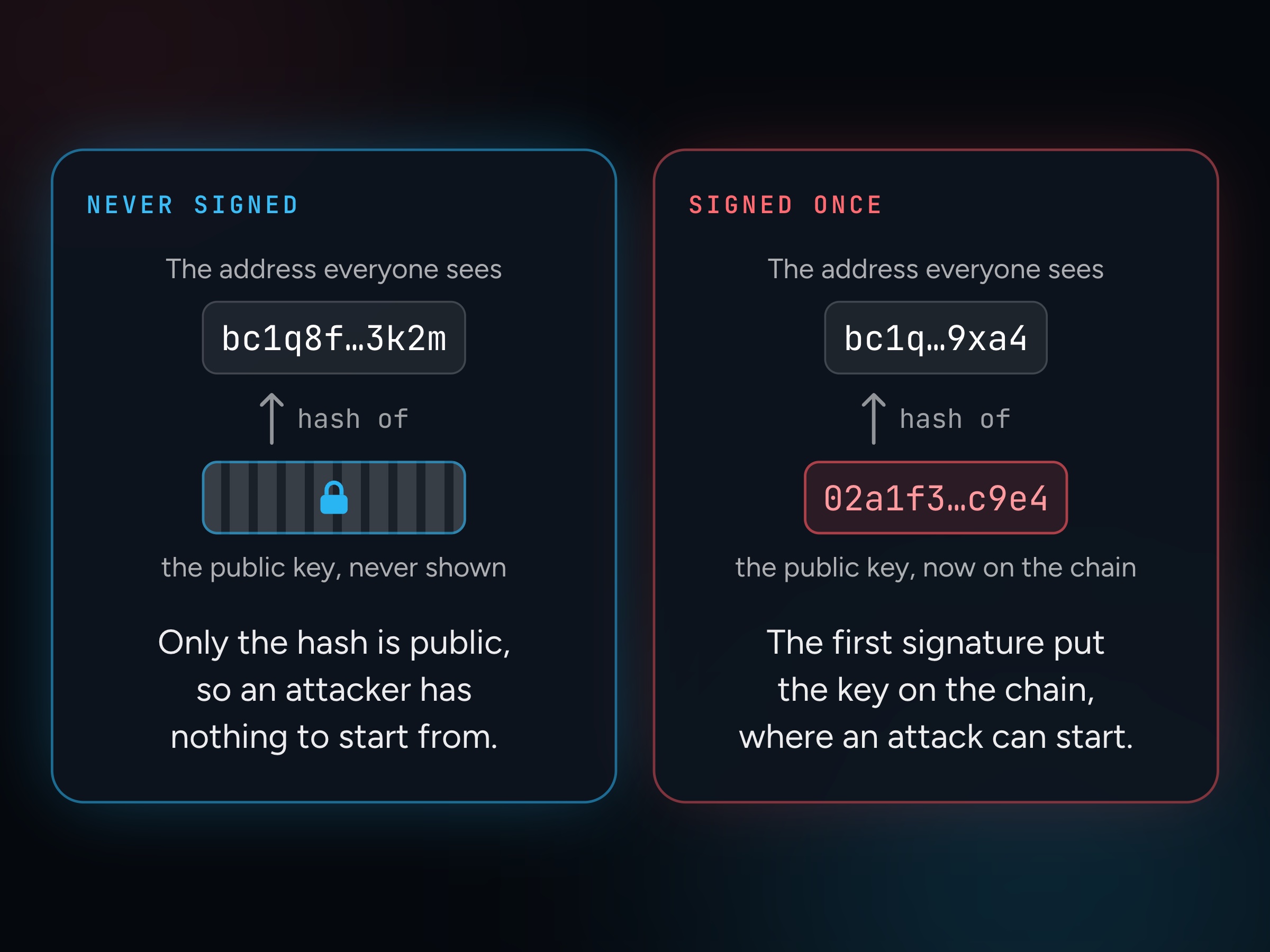
Bunker mode is Drake’s name for a controlled mass migration of crypto assets to fresh addresses, “addresses whose pubkeys remain hidden behind a hash.” Holders, starting with large and sophisticated ones, move the bulk of their funds to addresses that have never signed a transaction, and whenever they do sign one, they move what is left to a new address. He warns that ECDSA could fall before quantum computers arrive, “in the worst case in months not years,” and he sees the way out in hash-based cryptography: “A single battle-tested hash … yields plausible post-AI security.”
He also asked people not to panic. Moving to protected addresses is a simple, preventive step that needs no new cryptography and no new wallets, and a rushed migration would do more harm than good. Vitalik Buterin answered the next day that nobody should scramble to move funds today, and several cryptographers pushed back. Either way, the advice raises a question that has nothing to do with math. What does it reveal when everyone moves their coins at once?
Why a fresh address helps
Most Bitcoin addresses, and every ordinary Ethereum address, are a hash of a public key. The public key itself appears on the chain the first time the address signs a transaction, and from then on it stays there for good. A signed message gives it away as well, even one that never touches the chain. Someone who can recover private keys from public keys needs that public key to start. An address whose public key has never been revealed gives them nothing to work with, which is why bunker mode moves funds there and moves them again after every signature. A wallet that has shared its extended public key with an app, as watch-only and portfolio tools often ask, has revealed the keys of every address it will create, so in that case the fresh address should come from a new seed. Taproot addresses and the earliest Bitcoin outputs show their public key from the start, so they count as exposed already.
The trail a migration leaves
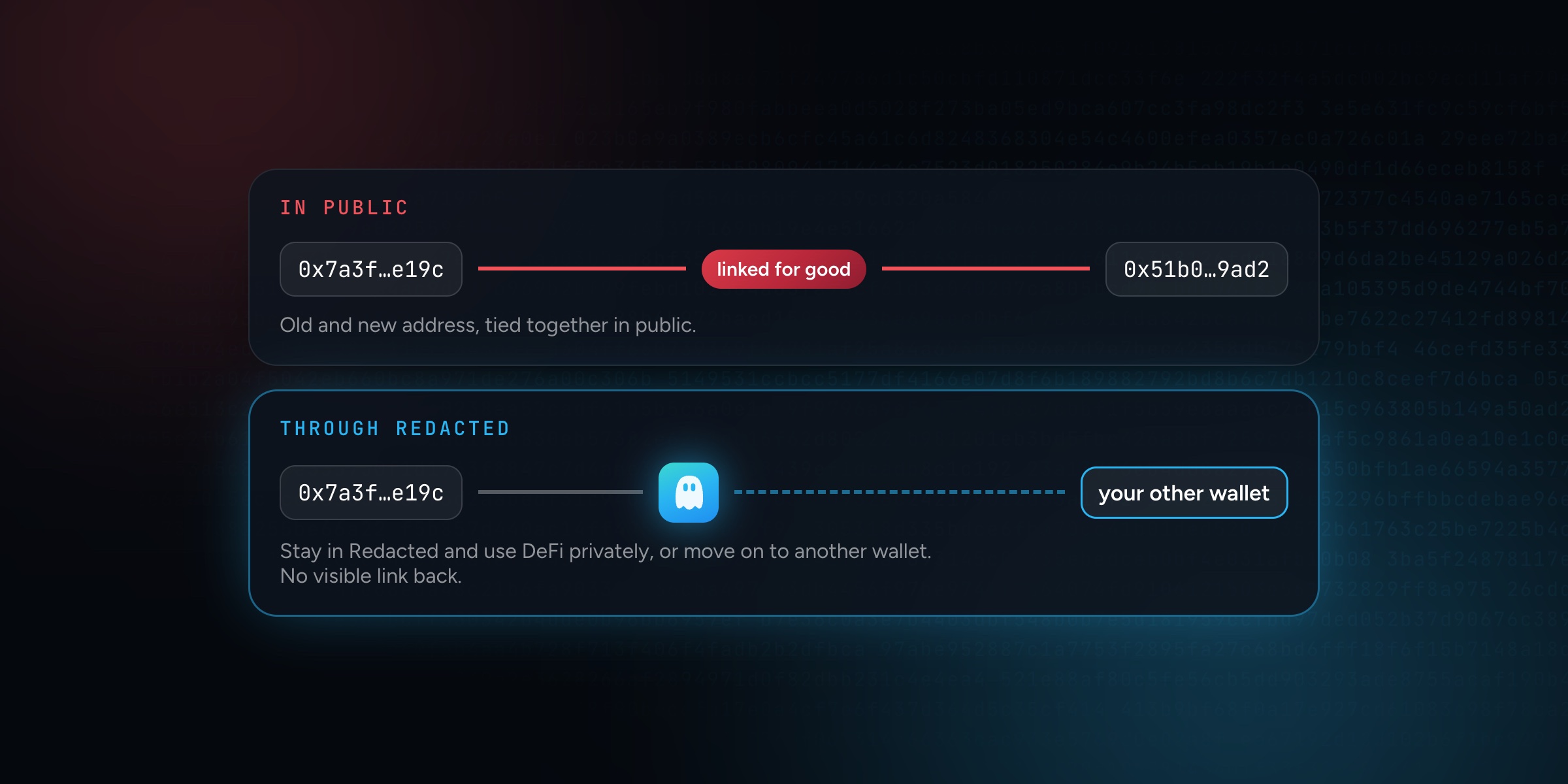
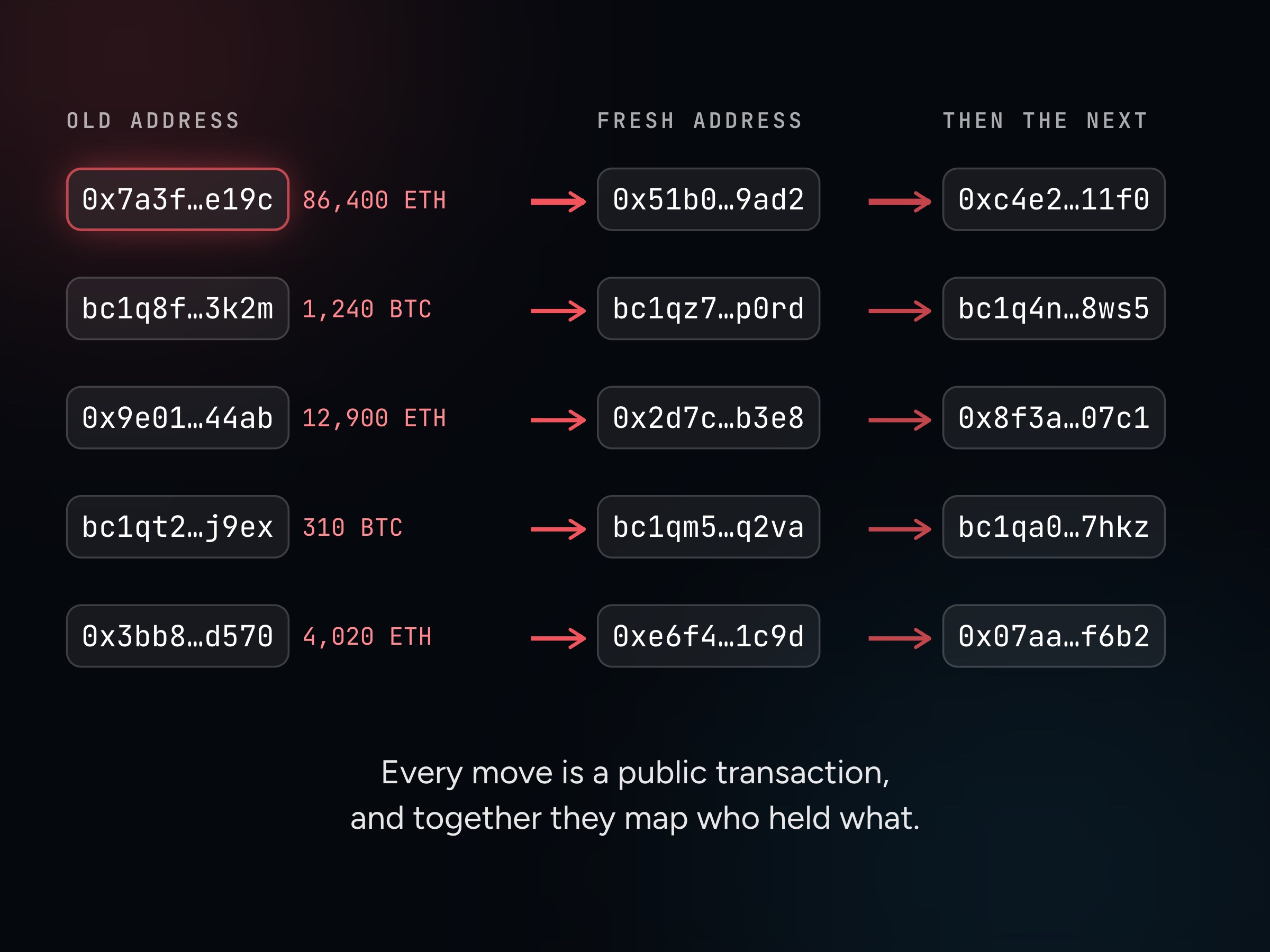
Moving coins from an old address to a new one is a public transaction. It ties the two together for good, so the fresh address inherits the old one’s history, its balance and every link to your name. One move is a footnote. Millions of moves in a few weeks are a map of who held what, where it went, and which new addresses now hold the most. Moving the rest of your funds again after every signature adds a new link each time, so the safer the habit, the longer the trail.
Move once, into Redacted
If bunker mode means moving your coins anyway, that move is also the moment to cut the link to your old wallet for good. A privacy layer splits it into two public ends with no transaction connecting them. You deposit from the old address into a shared space where everyone’s funds sit together, and no transaction ties what you do after that to where the coins came from. Rounded amounts, a wait before the money moves on and a big crowd of other users are what make that cut strong, so a large balance is best moved in a few common sizes over a few days.
From there you choose. Stay in Redacted and put your coins to work in DeFi, privately, or move them on to another wallet of yours. Either way no transaction leads from the old address to where your coins are now. Choose bunker mode for this move, and your old wallet never has to sign anything again, because your private account no longer depends on its key.
Native coins, private DeFi
Redacted is built on THORChain and Rujira. THORChain is permissionless. It holds real coins like Bitcoin, Ether, Solana and Zcash natively in its own vaults and swaps them across chains with no wrapping, no bridge and no custodian. Rujira is the DeFi layer on top, with an orderbook, lending and borrowing. Redacted lets you use all of it from an account with no on-chain link to your wallet.
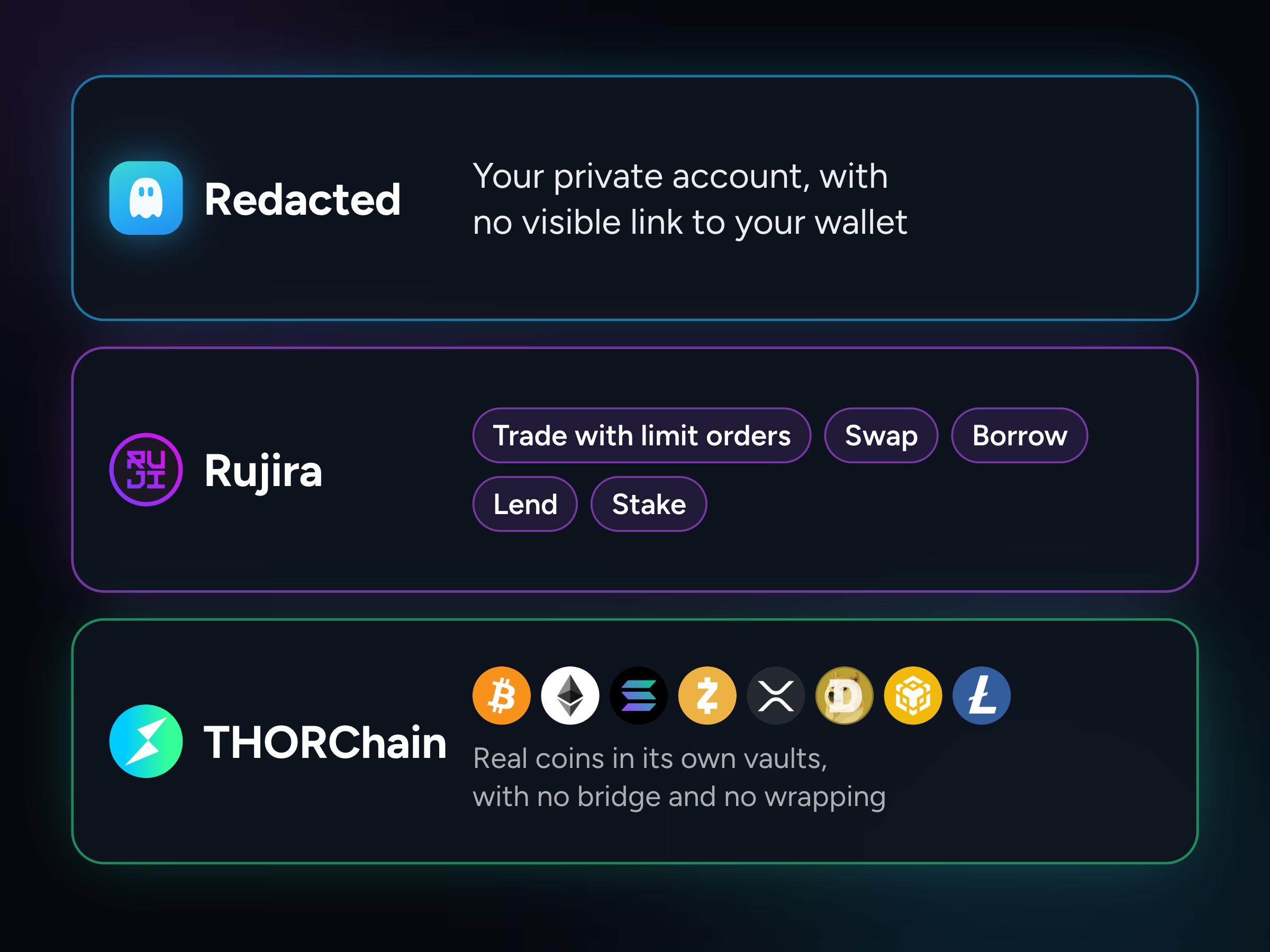
That gives coins like Bitcoin options they never had on their own chain. On Rujira you can trade Bitcoin, Ether, Solana, Zcash and every other native coin on THORChain with limit orders, and you can swap, borrow, lend and stake there too. You do all of it from a Spending account with no on-chain link to your wallet, and all of it works in bunker mode too.
Quantum-safe privacy, built on hashes
Hashes are what keep a note private, and hashes are what keep a public key hidden. Redacted’s bunker mode builds its notes, proofs and signatures on them, with no curves and no lattices, which is exactly the direction Drake points to. Nothing it writes on chain is encrypted, so there is nothing stored there for a future computer to decrypt.
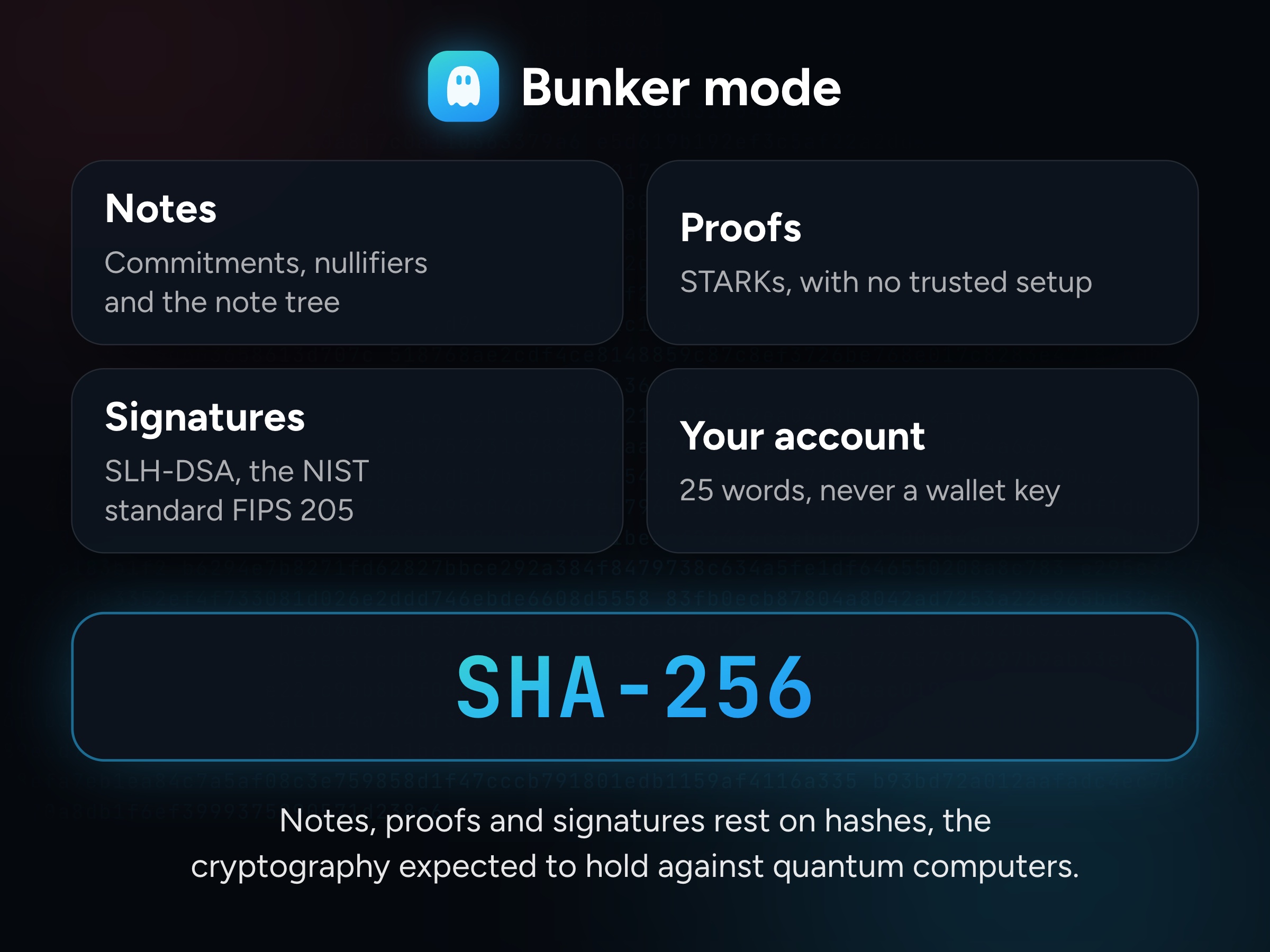
- One hash. Notes, nullifiers, the note tree and every proof transcript use SHA-256, the kind of battle-tested hash bunker mode bets on. The formats keep room for a second hash such as BLAKE2s.
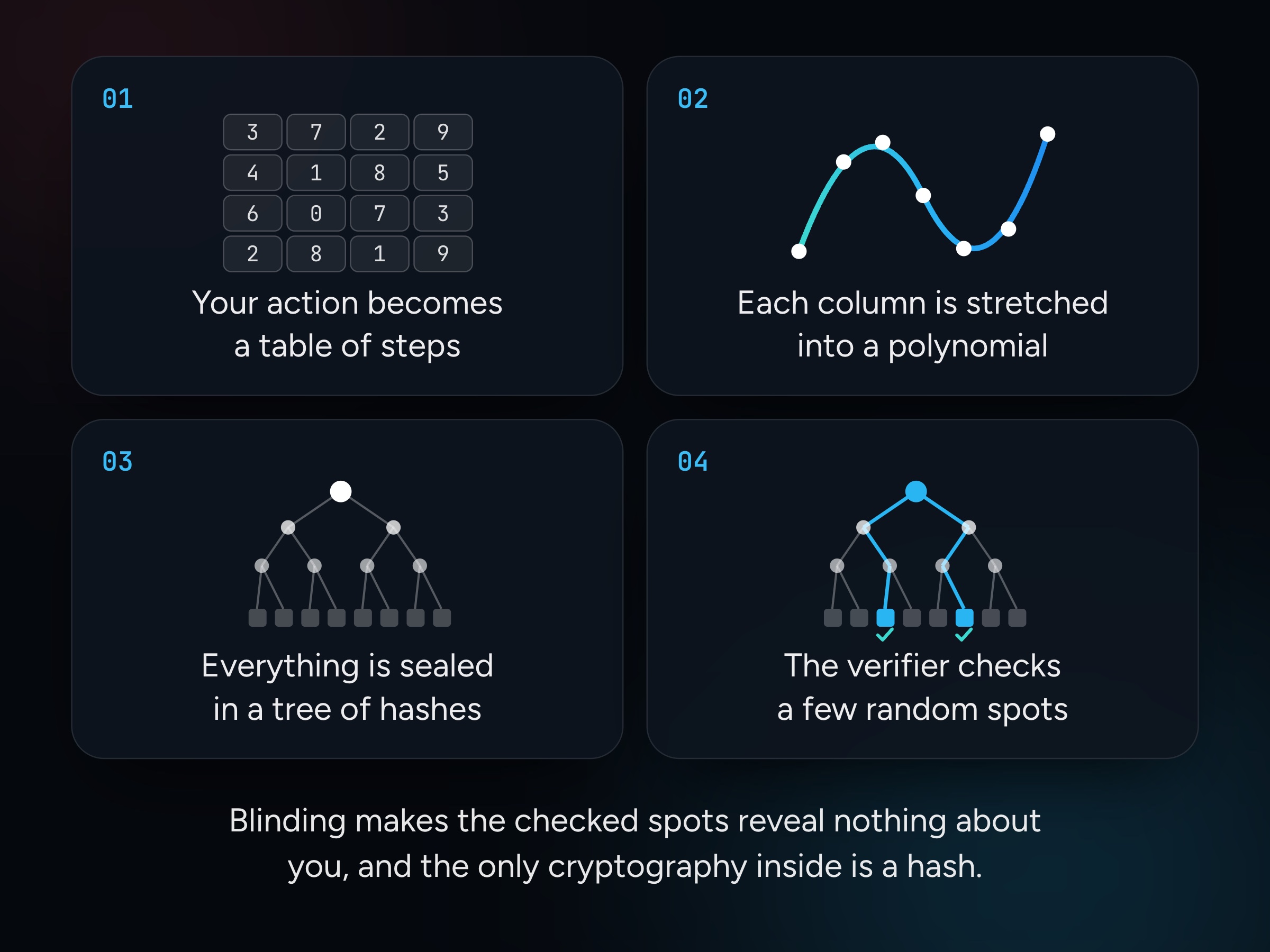
- Proofs made of hashes. Every spend from your private balance is proved with a STARK, a zero-knowledge proof whose only cryptographic building block is the hash. There are no elliptic curves, pairings or lattices in the proof, and no trusted setup.
- Signatures made of hashes. Nodes sign their approvals, and Spending accounts their actions, with SLH-DSA, the hash-based signature standard NIST published as FIPS 205, based on SPHINCS+, the scheme Drake names for load-bearing signers such as oracles and security councils.
- An account that is not your wallet key. Your Redacted account is 256 random bits, written down as 25 words, plus a second key that stays on your devices. It is never derived from a wallet signature, so a broken wallet key does not open your private balance.
Two modes, the same DeFi
Bunker mode in Redacted takes nothing away. You swap, trade, lend and borrow on Rujira just as before. The only thing that changes is how your account is secured, and bunker mode is there from day one.
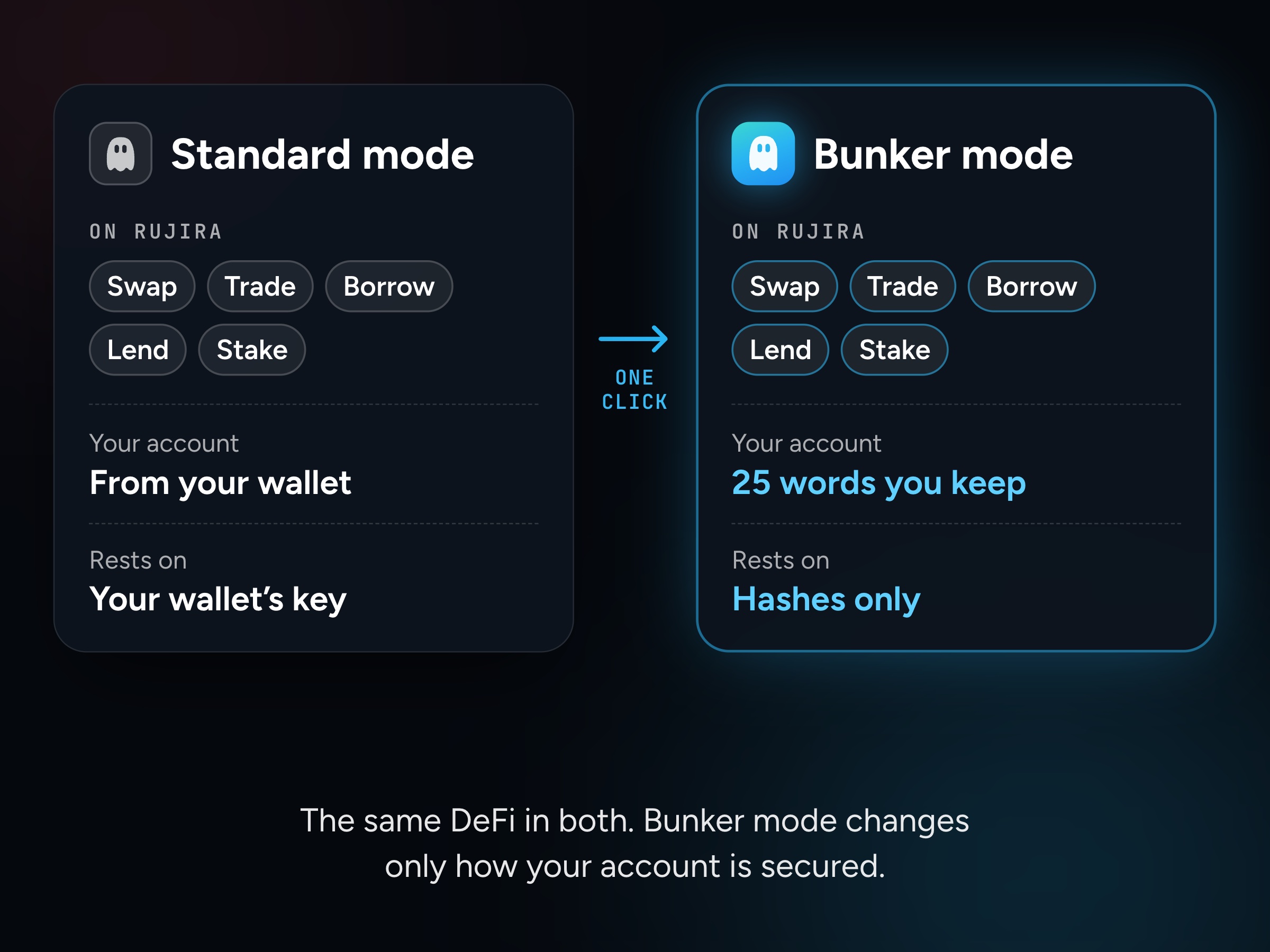
Standard mode is the simplest way in, because your Redacted account comes from the wallet you already have. Bunker mode asks for one extra step. Your account becomes 25 words that you keep yourself, so it never depends on a wallet key that could one day be broken.
Anyone who starts with a plain wallet can move into bunker mode at any time, with one click. Redacted then moves your private balance into the new account in the background, with no transaction linking the two accounts, and everything you used before works exactly the same.
Ready before Bitcoin and Ethereum move
Bitcoin and Ethereum still sign with elliptic curves, and moving them to post-quantum signatures is work under way across the industry. THORChain’s vaults sign on those chains, so THORChain moves together with them. When that happens, Redacted has nothing left to change. Its part is already built.
Is your current wallet exposed?
See what a stranger can read from your address today, before you decide where to move.
Am I Exposed?Calm, and private
Nobody knows whether elliptic curves will hold for another month or another thirty years, and nobody needs to panic either way. Whenever you do move, move without drawing the map. The cryptography most likely to outlast curves and the cryptography that keeps you private turn out to be the same thing, and it is hashes.
Redacted launches soon on THORChain and Rujira, with standard mode and bunker mode from day one.
Sources
The full details live in the documentation. This article is general information about open-source software, not financial or legal advice.